
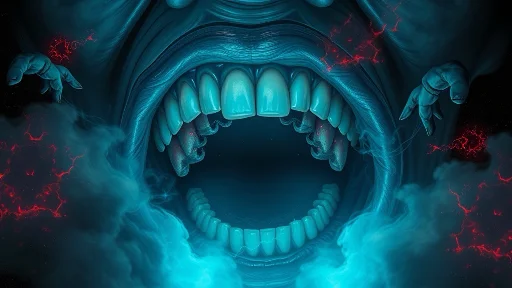
Direct answer: Teeth dreams are read through the household, not through a single lucky number. Classical readers linked upper teeth to the men of the family and lower teeth to the women, front teeth to close kin and back teeth to the wider household. But the same image can point to speech, worry, ageing or a real dental problem. The scenario — pain, blood, one tooth or many — decides which reading fits.
Why teeth are read as family and household
The classical association is not arbitrary. Teeth sit in the mouth, they are visible when you speak, they are lost with age, and they are repaired by a specialist. A missing tooth changes the face and the voice. Readers therefore treated teeth as a picture of the people who support a household and the words that hold it together.
This is a cultural grammar, not a medical fact. It tells you what the image has meant to readers. It does not tell you that a relative will die or that an appointment will go badly. The useful question is which part of the household the dream is actually describing.
Upper, lower, front and back
In the common reading, upper teeth are associated with the men of the family and lower teeth with the women. Front teeth are close kin and the face you show the world; back teeth are the wider household, the people who support from behind. These are tendencies, not fixed labels. A dream about a specific tooth can be a dream about a specific relationship.
Ask who came to mind when the tooth moved. The name that arrives before you start reasoning is often the name the dream is using. If no name arrives, stay with the role: a parent, a sibling, a colleague, a person you depend on.
Painless loss versus painful loss
A tooth that falls out without pain is often read as a change that costs less than expected: a role ends, a person moves, a phase closes. A painful loss shifts the reading toward strain, grief or a separation that still hurts. The pain is not a prediction; it is the emotional register of the image.
A tooth that crumbles rather than falls can suggest wear, neglect or a slow problem. A tooth that is pulled can suggest a decision someone else makes. A tooth that is loose but stays in place can suggest anxiety about something that has not yet happened.
Blood in the dream
Blood raises the intensity. In the classical vocabulary, blood can be read as life, kinship, guilt or a serious matter. The dream is not a diagnosis. If the blood was frightening, the reading is about fear and attachment. If it was calm, the image may be about a bond that is being marked or tested.
One practical rule: a dream about blood is a bad reason to avoid a doctor. If you have bleeding gums, pain or a loose tooth in waking life, the dream may be processing a physical sensation. Check the mouth before you check the symbol book.
One tooth versus many
One tooth often narrows the reading to one person or one role. Many teeth falling can suggest a wider change in the household, a season of losses, or a feeling that support is disappearing. The number is not a count of people. It is a measure of how much the dream feels at stake.
If the teeth fall into your hand, the image may be about holding on to what is leaving. If they fall to the floor and you cannot find them, the image may be about losing track of a responsibility. If they fall and new teeth appear, the dream may be about replacement rather than loss.
A tooth that grows back
Regrowth is one of the most hopeful variants. It can be read as recovery, a new role, a younger person entering the household, or a repair after a difficult period. The classical books do not agree on a single meaning, and that disagreement is useful: it shows that the image is a scene, not a code.
Notice what kind of tooth grew. A front tooth may point to how you appear to others; a back tooth may point to support you did not know was there. Notice also how you felt when it grew. Relief and fear produce different readings.
Teeth dreams for a child or an elderly parent
When the dream is about someone else's teeth, the reading usually shifts from the dreamer's household to care and responsibility. A child losing a tooth is a normal image of growth; an elderly parent losing teeth can carry fear about health, dependence or time. The dream may be processing a real concern rather than announcing an event.
Use the dream as a prompt for a practical conversation, not as evidence. Ask how the person is feeling. Check the appointments that are already due. A dream about a parent's teeth is a poor substitute for a phone call.
When the dream is a dental signal
Teeth grinding, jaw clenching, sleep apnoea and reflux can all produce dreams about teeth. So can a loose filling or an inflamed gum. If the dream repeats, if you wake with jaw pain or headaches, or if a tooth is actually loose, treat the body first. A dentist can rule out the physical cause faster than an interpreter can rule in a symbolic one.
For the broader symbol, see teeth falling out in Islamic interpretation. For the household frame, see Ibn Sirin's dream symbols.
Frequently Asked Questions
Does a teeth dream predict a death in the family
No. The classical tradition uses teeth as a picture of the household, not as a death notice. Treating the dream as a prediction creates fear without evidence and is not how responsible readers use the image.
What if only one tooth falls out
One tooth usually narrows the reading to one person, one role or one concern. Ask who came to mind and what that relationship is going through before you choose a meaning.
Why do I dream about teeth when I am stressed
Stress often shows up in the jaw and the mouth. Clenching, grinding and dry mouth can feed the image. The dream may be reporting tension rather than announcing a symbolic event.
Should I see a dentist after a teeth dream
If you have pain, bleeding, a loose tooth or repeated jaw symptoms, yes. The dream is not the reason, but it can be a useful reminder to check something that is already bothering you.
Describe the scene, not just the tooth
dreamOut AI Dream Interpreter captures the pain, the blood, the person and the feeling in seconds, then reads the whole dream in ten languages, with AES-256 encryption and export or deletion whenever you choose.
Download dreamOut